Anker SOLIX C300 DC Portable Power Station
Compact 288Wh LiFePO4 power bank with 140W USB-C output — a solid backup for USB-C home office gear, but no AC outlet means it won't run everything.
Price may vary. As an affiliate, we earn from qualifying purchases.
What we like
- 288Wh LiFePO4 battery with a 3-year guarantee and long cycle life
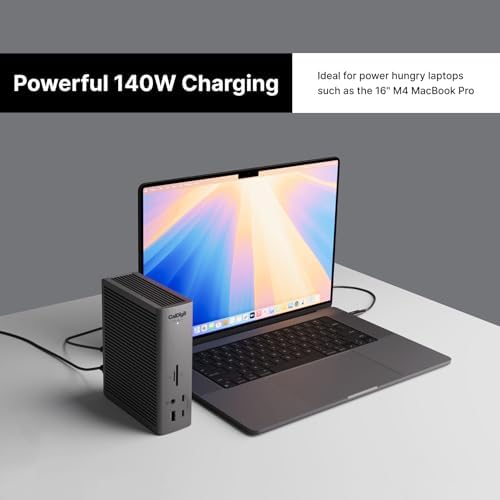
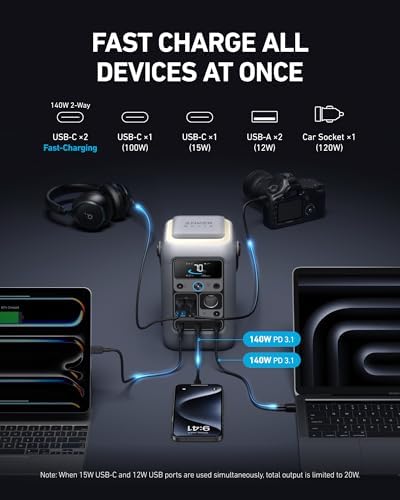
- 140W USB-C PD keeps most modern laptops running at full speed
- Seven ports total (4× USB-C, 2× USB-A, 1× car socket) handle a full desk
- Roughly 30% smaller and lighter than comparable AC power stations
- Recharges to 80% in about an hour via the dual 140W USB-C inputs
Could be better
- DC-only — no AC wall outlet, so anything with a standard plug is out
- Not a true UPS: there's a brief switchover delay when wall power drops
- Wall charger isn't included in the box on most SKUs
- 288Wh won't run a monitor and laptop for a full workday under load
Full Review
The SOLIX C300 DC is Anker’s take on a “modern desk” power station — no AC inverter, no bulky transformer, just a wall of USB-C and USB-A ports backed by a 288Wh LiFePO4 pack. If your home office has already migrated to USB-C charging, it’s one of the most useful backup batteries you can buy. If you’re still running gear with three-prong plugs, keep reading before you hit buy.
Build and Size
LiFePO4 is the right chemistry here. You get thousands of charge cycles, better thermal behavior, and a realistic 10-year useful life instead of the 2-3 years you’d expect from older lithium-ion packs. The unit itself is roughly the size of a thick hardcover book at 6.2 pounds — small enough to shove between a monitor arm and a wall, and light enough to grab for travel without thinking about it.
Power Delivery for a Home Office
The two 140W USB-C ports are the headline. Plug a MacBook Pro 16” or a Dell XPS into one and it charges at full speed — no throttling, no “this charger may not be compatible” warnings. A second port can handle a USB-C monitor or a docking hub. Add a phone and a pair of headphones on the USB-A side and you’ve covered most of a desk from a single brick.
The UPS Question
This is where honesty matters. The C300 DC is not a true uninterruptible power supply. When grid power drops, there’s a short switchover gap — long enough that a desktop PC will reboot. It works well as a “keep my laptop and monitor alive through a 30-minute outage” device, but it won’t replace a dedicated UPS for anything with a spinning hard drive or an AC-only power brick. If you need seamless failover for a desktop, buy an APC or CyberPower UPS instead.
Runtime Reality Check
288Wh sounds like a lot until you do the math. A MacBook Pro pulling 60W under load gets you roughly 4 hours. Add a 30W USB-C monitor and you’re closer to 2.5-3 hours. That’s enough to finish a meeting and save your work during a typical outage — not enough to ride out a half-day blackout while running a full setup.
Who Should Buy This
Buy the C300 DC if your home office is USB-C first — laptop, USB-C monitor, phone, headphones — and you live somewhere with occasional short power outages you want to ride through without losing work. It’s also a legitimately great travel battery for hotel desk setups. Skip it if you have a desktop PC, an AC-powered monitor, or you’re shopping for a true UPS. In that case, look at Anker’s AC-equipped SOLIX C1000 or a traditional UPS from APC instead.