CyberPower CP1500AVRLCD3 UPS Battery Backup
A 1500VA/900W UPS with 12 outlets, automatic voltage regulation, and enough runtime to save your work and shut down cleanly — the default work-from-home pick.
Price may vary. As an affiliate, we earn from qualifying purchases.
What we like
- Automatic Voltage Regulation rides through brownouts without draining the battery
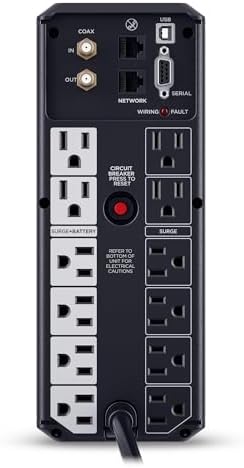
- 12 outlets — 6 battery+surge, 6 surge-only — cover a full desk setup
- Clear LCD reports load, runtime, and battery status at a glance
- 3-year warranty includes the battery, not just the electronics
Could be better
- Simulated sine wave output, not pure sine — fine for most gear but not ideal for some high-end PSUs
- Battery is heavy and replacement cells cost $40–60 every few years
- Loud beep on power loss with no easy hardware mute
Full Review
After the grid scares of 2024, a UPS stopped being a nice-to-have for remote workers and became standard equipment. The CyberPower CP1500AVRLCD3 is the unit most people land on, and for good reason — it does the boring job of keeping your machine alive through a blip without asking you to think about it.
What It Actually Protects You From
Most “outages” at a desk aren’t full blackouts — they’re brownouts, sags, and brief flickers that crash an unsaved document or corrupt a file mid-write. The CP1500AVRLCD3’s Automatic Voltage Regulation handles those by correcting the incoming voltage internally, without dipping into the battery. That matters because every switch to battery is a charge cycle, and AVR lets the unit smooth out minor fluctuations while saving the battery for real outages.
When the power does drop completely, you get roughly 12 minutes at half load. That’s not enough to keep working through an outage — it’s enough to save what’s open, close out, and shut down gracefully. Set that expectation correctly and you won’t be disappointed.
The Outlet Layout
Twelve outlets split into two banks: six are battery-backed and surge-protected, six are surge-only. The split is genuinely useful. Put your computer, monitor, and network gear on the battery side; printers, lamps, and chargers go on surge-only. The two USB ports top off a phone or peripheral. The LCD shows real-time load and estimated runtime, so you can see exactly how much headroom you have before you overload the battery bank.
Where It Falls Short
The output is a simulated sine wave, not pure sine. For the vast majority of home-office gear this is a non-issue, but a few high-end active-PFC power supplies are picky and may click or refuse to switch over. If you’re running a workstation with a premium PSU, the pricier pure-sine CyberPower CP1500PFCLCD is the safer call. The alarm is also loud and hard to silence in hardware — you’ll want the PowerPanel software to manage it.
CP1500AVRLCD3 vs. APC BR1500MS2
The APC BR1500MS2 is the obvious rival at this price, and it’s a close fight. The APC offers pure sine wave output, which is the one real advantage if you have sensitive equipment. The CyberPower counters with a clearer LCD, an extra USB port, and typically a lower street price. For a standard desk — a single PC, a monitor or two, and a router — the CyberPower is the better value. If you want pure sine wave insurance, the APC is worth the premium.
Who Should Buy This
Buy this if you work from home, store anything important locally, and want a set-and-forget safety net against flickers and short outages. It’s the right pick for the typical desk setup running standard consumer gear. If you have a high-end workstation with a finicky active-PFC power supply, step up to a pure-sine model like the CP1500PFCLCD or the APC BR1500MS2 instead.