HBADA E3 Air Ergonomic Office Chair (2026 Edition)
HBADA's lightest, most forgiving ergonomic chair — softer support, more recline freedom, and a price that undercuts the E3 Pro by $150.
Price may vary. As an affiliate, we earn from qualifying purchases.
What we like
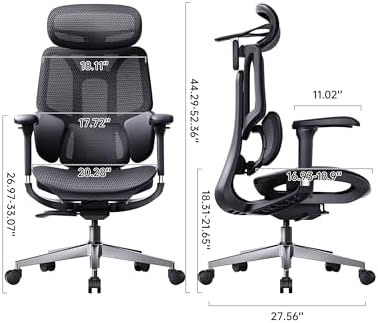
- 3-zone lumbar adapts to lower, mid, and upper back without feeling like a brace
- 4D bi-axial headrest finally rotates and tilts properly
- 360° armrests fold out of the way when you need to pull up to the desk
- 5-level tilt lock from 100° to 140° covers work, lean-back, and nap positions
- Wide height range fits users from 5'1" to 6'5"
Could be better
- Less aggressive lumbar than the E3 Pro — back-pain users may want more
- Mesh seat is comfortable but softer than competitors at this price
- Assembly instructions are still mediocre, plan on 30-40 minutes
Full Review
The E3 Air is HBADA’s answer to a complaint they kept hearing about the E3 Pro: it’s too supportive. The Pro’s 3-zone lumbar pushes hard into your back, the armrests lock in tight, and the frame is rigid by design. Great if you have chronic back issues. Less great if you just want to sit comfortably for eight hours and occasionally lean back.
The 2026 Edition Air dials all of that back. The lumbar still has three zones, but they flex more than they push. The frame is lighter, the seat mesh is softer, and the recline opens up to a full 140° with five lock points along the way.
Lumbar and Back Support
The 3-zone elastic lumbar fills the lower-back gap automatically when you sit. It’s pressure-responsive rather than aggressively contoured — closer to the feel of a Sihoo M102C Pro than a Herman Miller Aeron. If you’ve used the E3 Pro and found it too forceful, this is what you wanted. If you’ve never had back issues and just want a chair that doesn’t fight you, it’s ideal.
Adjustments and Fit
The 4D bi-axial headrest is the real upgrade over older E3 Air models — it pivots on two axes instead of just one, so you can dial in the angle for both sitting upright and reclining. The 360° armrests rotate fully and fold inward when you pull up to a desk. Seat depth adjustment is a nice surprise at this price; most $300 chairs skip it entirely. The wide height range (5’1” to 6’5”) makes this a reasonable shared-household chair too.
Recline and Daily Use
The 5-level tilt lock from 100° to 140° is the feature that makes this chair work as a “live in it” option. Lock at 105° for typing, 115° for reading, 130° for video calls where you want to look relaxed, 140° for a nap. The gravity-sensing chassis adjusts tension based on your weight, so you’re not constantly fiddling with the recline knob.
E3 Air vs. E3 Pro vs. Sihoo M102C Pro
The E3 Pro 2026 ($449) is more supportive, more rigid, and built for users who genuinely need ergonomic correction. The Sihoo M102C Pro ($280) is the closest cross-shop — similar price, similar adjustment range, slightly firmer mesh. The E3 Air sits between them: softer than the Sihoo, more forgiving than the Pro, and the cheapest of the three with 4D armrests and bi-axial headrest.
Who Should Buy This
Buy the E3 Air if you want a comfortable ergonomic chair for general all-day use without aggressive lumbar pressure, and you value recline flexibility over rigid support. If you have an active back problem or sit for 10+ hours a day, the E3 Pro is worth the extra $150. If you want firmer mesh and don’t need the bi-axial headrest, the Sihoo M102C Pro saves you $20.