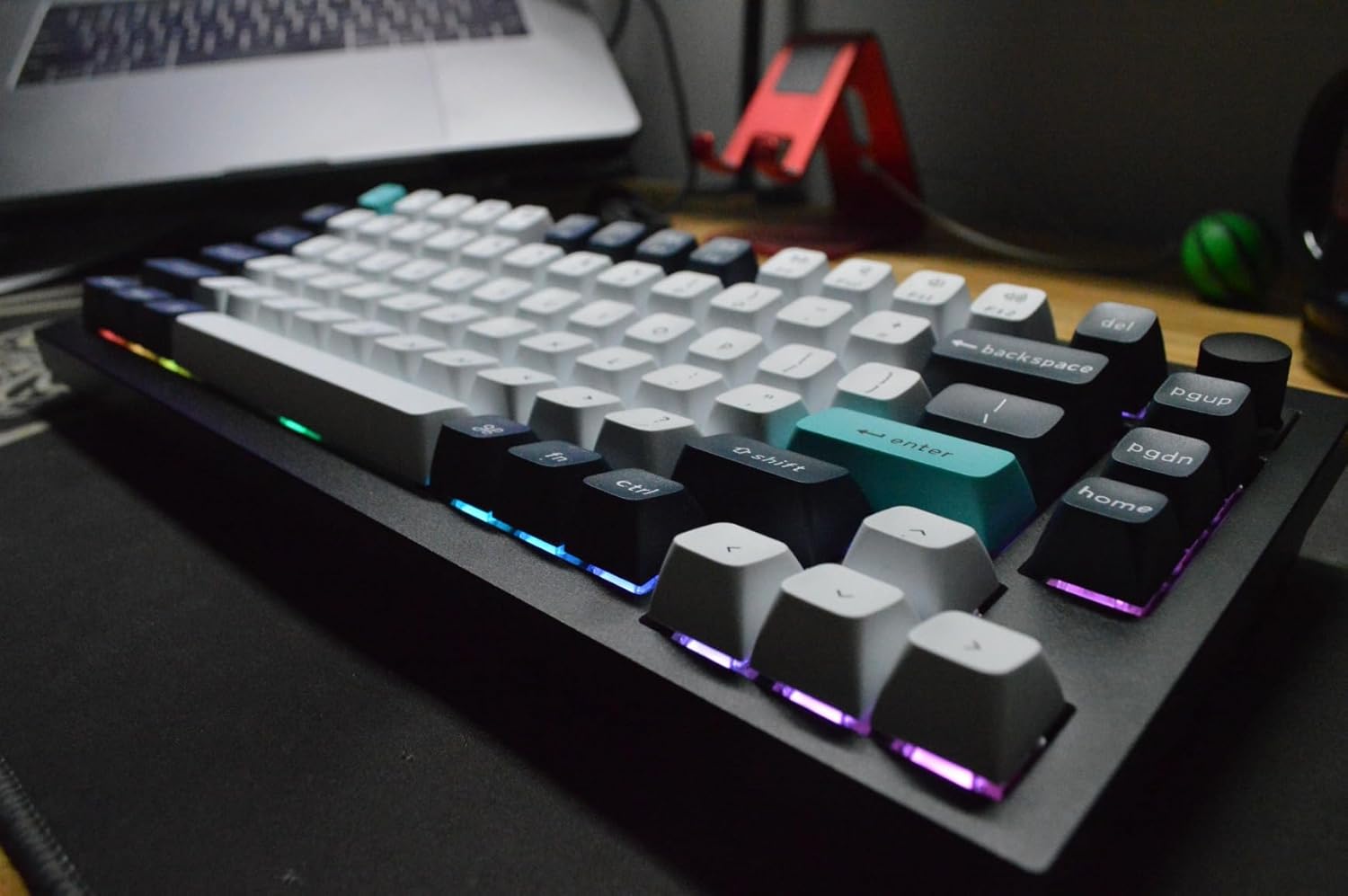
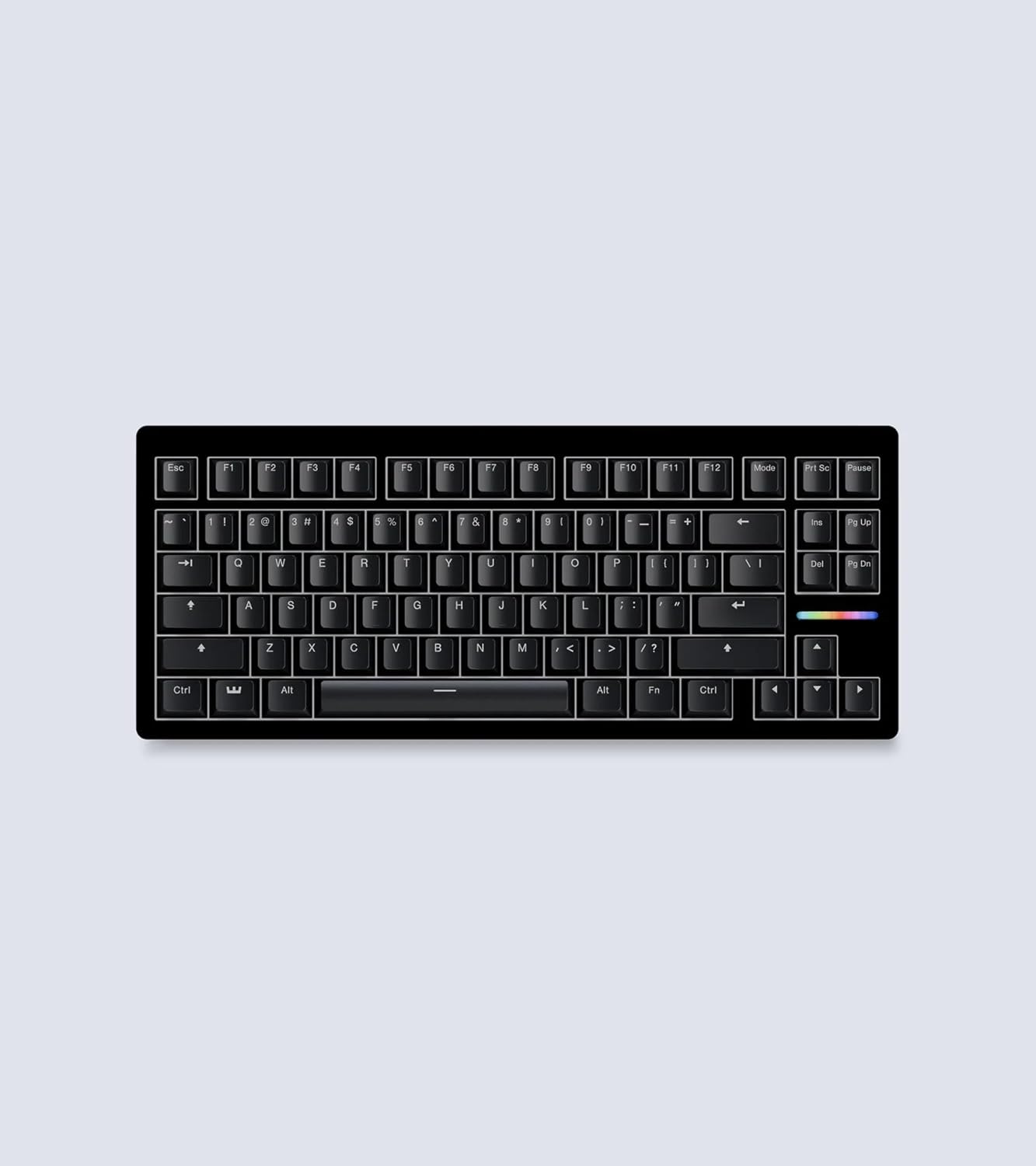
Keychron K3 Max Low Profile Wireless Keyboard
An ultra-slim 75% low-profile mechanical keyboard with triple-mode wireless, hot-swap switches, and full QMK/VIA support — the closest thing to a MacBook keyboard that's actually mechanical.
Price may vary. As an affiliate, we earn from qualifying purchases.
What we like
- Genuinely laptop-thin — sits barely taller than a MacBook keyboard
- Triple connectivity: Bluetooth 5.1 (3 devices), 2.4GHz, and USB-C wired
- Hot-swappable low-profile switches and full QMK/VIA remapping
- Ships with both Mac and Windows keycaps out of the box
Could be better
- Plastic frame feels less premium than aluminum boards at this price
- Cramped 75% arrow and function cluster takes adjustment
- Low-profile switch and keycap selection is still narrow
- No rotary knob, unlike some pricier K-series models
Full Review
If you switched to a MacBook and miss a real keyboard but can’t stand how a normal mechanical board towers over your laptop, the Keychron K3 Max is built for exactly that complaint. It’s a 75% low-profile board that’s thin enough to live next to a laptop without looking absurd, but it still has hot-swap mechanical switches, RGB, and the deepest customization software on the market. It’s the natural step up from the older K3 Pro, mainly because of connectivity.
Laptop-Thin, But Actually Mechanical
The whole point of the K3 Max is the height. The case sits low enough that the typing position feels close to a chiclet laptop keyboard, so the adjustment from a MacBook is minimal. The difference is what’s under the keys: real Gateron low-profile switches with actual travel and a crisp bottom-out, instead of the dead, shallow press of a Magic Keyboard.
You give up a little to get there. Travel is shorter than a full-height mechanical board, so if you’re coming from a tactile full-size keyboard it can feel slightly clicky and abrupt at first. Coming from a laptop, it feels like a clear upgrade.
Connectivity Is the Real Upgrade Over the K3 Pro
This is where the K3 Max earns its name. You get Bluetooth 5.1 across three paired devices, a dedicated 2.4GHz dongle for low-latency wireless, and USB-C wired mode. The K3 Pro was Bluetooth-and-wired only, so if you bounce between a work laptop on the dongle and a personal machine on Bluetooth, the Max is the one to get.
Switching devices is a single key combo, and the 2.4GHz mode is the one to use for anything latency-sensitive. Battery life is measured in weeks of normal use with the backlight dimmed.
Customization and Build
QMK/VIA support means you can remap every key, build layers, and program macros from a browser — no fighting with clunky proprietary software. It’s overkill for most people and a genuine selling point for the ones who want it. The board hot-swaps low-profile switches too, so you’re not locked into your first choice.
The honest knock is the frame. It’s plastic, and at this price you can find aluminum boards that feel more planted on a desk. The K3 Max trades that heft for portability, which is the right call for its audience but worth knowing. The 75% layout also crams the arrows and function row tight, so give yourself a few days.
Who Should Buy This
Buy the K3 Max if you’re a laptop user — especially a MacBook switcher — who wants a mechanical keyboard that respects your desk and your slim aesthetic, plus the flexibility of 2.4GHz wireless. If you already own the K3 Pro and only type over Bluetooth, the upgrade is minor. And if you want a premium, planted feel over portability, a full-height aluminum board will serve you better — but it won’t disappear next to your laptop the way this one does.