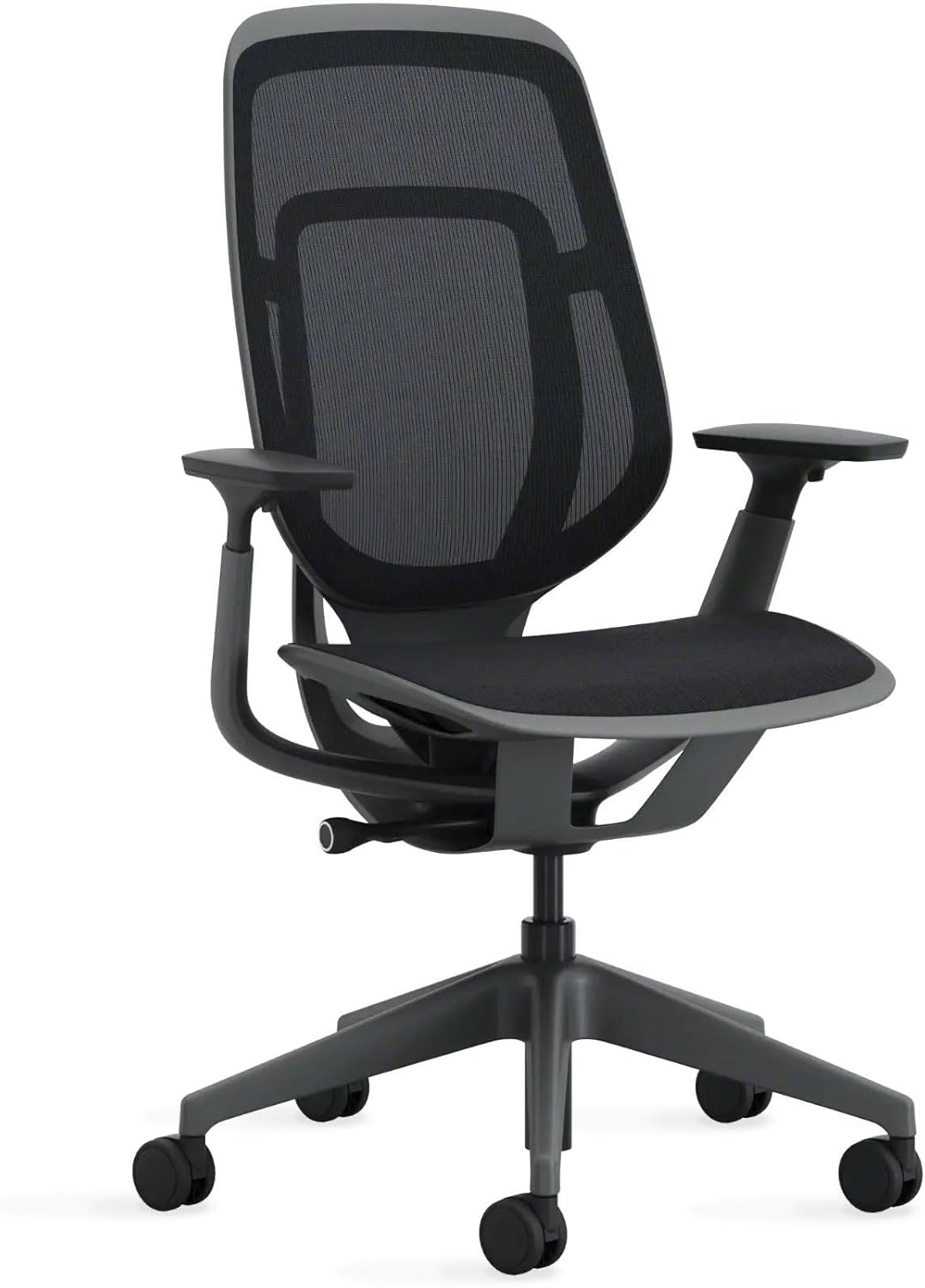
Steelcase Karman Ergonomic Chair
Steelcase's 2024 flagship ditches the adjustment dials in favor of a flexible frame that reacts to how you sit — a radical rethink of what an ergonomic chair should be.
Price may vary. As an affiliate, we earn from qualifying purchases.
What we like
- LiveBack frame flexes dynamically with your spine — no manual recline tension to fuss with
- Featherlight at just 29 lbs, noticeably lighter than a Gesture or Aeron
- Weight-activated recline tunes itself to you automatically
- Breathable Intermix mesh seat and back stay cool through long sessions
- Ships nearly fully assembled in under 5 minutes
Could be better
- Only 4 adjustment points — no seat depth, no back height, no recline tension
- Fixed arms on base model; 4D arms cost extra
- $1,495 price tag is firmly in Herman Miller territory
- No headrest option available at any price
Full Review
The Karman is Steelcase’s answer to a question nobody was asking but everyone should have been: what if your chair just… worked, without you needing to tune it like a racecar? After two years on the market, it’s settled in as the most polarizing high-end office chair since the Aeron dropped in 1994.
The “Less Is More” Gamble
Most ergonomic chairs in this tier flex seven to nine adjustment points. The Gesture has seven. The Embody has six. The Karman has four — height, arm height, lumbar position, and a recline lock. That’s it. No seat depth slider, no back height, no tension dial.
Steelcase’s argument is that those adjustments exist because traditional chairs are rigid, so they need knobs to force them into the right shape. The Karman’s LiveBack frame is flexible by design — it bends where your spine bends, flexes when you lean, and firms up when you sit upright. The weight-activated recline means a 130-lb user and a 230-lb user both get appropriate pushback without touching a dial.
Does It Actually Work?
Mostly, yes. The chair genuinely moves with you in a way that feels closer to a good task stool than a locked-down executive throne. Leaning forward to type, reclining to read, shifting sideways on a call — the Karman tracks all of it without protest.
The caveat: if you’re outside the 5th–95th percentile body size range Steelcase designed for, you’ll feel it. Taller users (6’3”+) report the back feels short. Shorter users sometimes can’t get the seat edge out of their calves because depth isn’t adjustable. The Gesture handles these outliers better because you can tune around them.
Karman vs. Gesture vs. Aeron
Against the Gesture ($1,600+), the Karman is lighter, cooler, and simpler — but the Gesture’s arms are still the best in the industry if you work across laptop, phone, and tablet all day. Against the Aeron ($1,800+), the Karman is more forgiving on posture shifts and breathes slightly better, while the Aeron still wins on durability pedigree.
If you want infinite tunability, the Karman isn’t for you. If you want to sit down and forget the chair exists, it’s arguably the best option Steelcase has ever made.
Who Should Buy This
Buy the Karman if you hate fiddling with chair settings, share the chair with a partner or coworker, or want a lighter, cooler-running alternative to the Gesture or Aeron. Skip it if you’re over 6’3”, under 5’2”, need a headrest, or consider seat-depth adjustment non-negotiable — the Steelcase Gesture is the smarter pick in those cases.