Apple Studio Display XDR (2026)
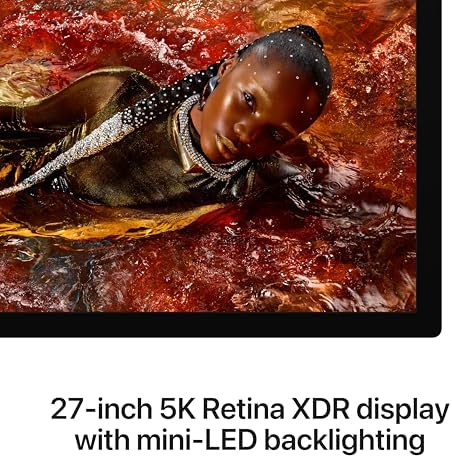
Apple's 2026 Studio Display XDR finally brings mini-LED, 2,000-nit HDR, and Thunderbolt 5 to the 27-inch Mac display category.
Price may vary. As an affiliate, we earn from qualifying purchases.
What we like
- Mini-LED with 2,304 dimming zones delivers genuine HDR, not the flat 600-nit ceiling of the 2022 model
- Thunderbolt 5 host port pushes 96W charging and supports daisy-chaining a second XDR
- 27-inch 5K (5120x2880) is still the cleanest pixel-density match for macOS Retina scaling
- Upgraded 12MP Center Stage camera and six-speaker array make it a complete one-cable desk hub
Could be better
- $2,749 base price climbs fast with nano-texture glass or the height-adjustable stand
- Still no HDMI input — Mac-only by design, useless for a console or PC switcher
- 120Hz ProMotion only works on M3 Pro/Max and later — M1/M2 Macs are capped at 60Hz
Full Review
The 2022 Studio Display was a beautiful panel attached to a mediocre HDR story and a notoriously bad webcam. The 2026 XDR refresh fixes both, plus the port that everyone has been waiting four years for.
The Panel Is Finally XDR
Apple slapped “XDR” on this thing for a reason. The 2,304-zone mini-LED backlight pushes 1,000 nits sustained and 2,000 nits in HDR highlights, which is the same headline number as the Pro Display XDR from 2019 — at a third of the price and without the $999 stand. Black levels in dark scenes are dramatically better than the old edge-lit Studio Display, and you can finally grade HDR content on a Mac desk display without lying to yourself about what you’re seeing.
The 5120x2880 resolution and 218 PPI are unchanged, which is the right call. macOS Retina scaling looks crisper here than on any 4K or 5K2K alternative, and that pixel pitch is still the single biggest reason Mac users buy this over a BenQ or Dell.
Thunderbolt 5 Changes the Desk
The single host port is now Thunderbolt 5, with 96W of charging and 120Gbps of bandwidth. That means a 16-inch MacBook Pro charges at full speed off the display, and the three downstream USB-C ports can drive real peripherals — not just the trickle the old model offered. You can also daisy-chain a second Studio Display XDR for a 29-million-pixel two-monitor setup off one Thunderbolt port, which is genuinely new for this category.
Camera and Speakers Are Actually Good Now
The original Studio Display’s 12MP camera was a software disaster at launch. The 2026 model uses the same sensor architecture as the iPhone front camera, and Center Stage tracking plus Desk View work the way they were always supposed to. The six-speaker array gets meaningfully louder and bassier than the 2022 unit, and Spatial Audio with head tracking is a nice surprise on a desktop monitor.
How It Compares
If you don’t need HDR, the 2022 Studio Display is still around $1,599 and gets you the same resolution. The BenQ PD2730S is the closest non-Apple alternative at roughly $1,300 — same 5K panel, no mini-LED, but it has HDMI and a hardware KVM. Choose the BenQ if you switch between a Mac and a PC. Choose the XDR if you live entirely in macOS and want the brightest, most color-accurate 27-inch display Apple has ever made.
Who Should Buy This
Mac Studio, Mac mini, and MacBook Pro owners doing color-critical work — photo retouching, HDR video grading, motion design — who were previously stuck choosing between the dim 2022 Studio Display and the $5,000+ Pro Display XDR. The Thunderbolt 5 charging and daisy-chain support also make this the obvious pick for anyone running a one-cable MacBook desk in 2026. Skip it if you need 120Hz, an HDMI input, or any kind of PC compatibility.