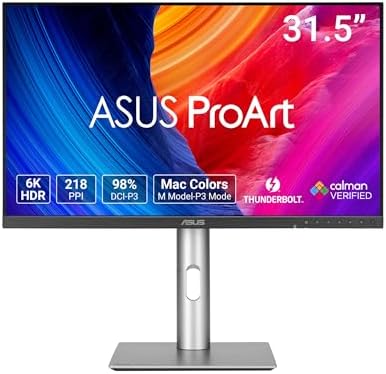
ASUS ProArt Display PA32QCV 32" 6K Monitor
A 32-inch 6K IPS monitor with Thunderbolt 4, 98% DCI-P3, and Calman verification — the most credible Apple Studio Display alternative for Mac creators in 2026.
Price may vary. As an affiliate, we earn from qualifying purchases.
What we like
- 6016x3384 resolution at 218 ppi — same density as Apple's Studio Display in a larger panel
- Calman verified with Delta E<2 and 98% DCI-P3 coverage out of the box
- Dual Thunderbolt 4 with 96W power delivery and daisy-chaining
- DisplayHDR 600 plus full HDMI 2.1 and DisplayPort 1.4 — vastly more flexible than Studio Display
Could be better
- 60Hz refresh rate — no high-refresh option at this resolution yet
- IPS (not mini-LED), so HDR highlights are good but not reference-grade
- Stand is functional but bulkier than Apple's design
Full Review
The PA32QCV is ASUS’s direct shot at the creator monitor segment Apple has owned for the last four years. At $1,299 it sits within $100 of the Studio Display, but offers 6K resolution, Thunderbolt 4 with 96W power delivery, real HDR, and a port selection that doesn’t insult anyone with a Windows machine. For 2026, this is the new default recommendation for color-accurate work above 4K.
Why 6K Matters Now
The 6016x3384 panel hits 218 ppi — identical pixel density to the 27-inch Studio Display, but stretched across 32 inches of usable space. That math gives you 145% more workspace than a 32-inch 4K monitor at the same Retina sharpness. For video editors scrubbing 4K timelines with full bin and scopes visible, or photographers wanting 1:1 pixel preview alongside Lightroom panels, the difference is structural, not cosmetic. 4K at 32 inches has always been a compromise: too coarse for Retina scaling, too cramped for native 1:1.
Color and HDR
Calman verification with Delta E<2 out of the box means you can plug it in and trust it for client work without buying a colorimeter on day one. 98% DCI-P3 covers the gamut most creators actually deliver to. DisplayHDR 600 is the honest spec — it’s a real step up from the Studio Display’s SDR-only panel, but it’s still IPS, not mini-LED. If you grade HDR for streaming deliverables, the PA32UCG-K or a reference Sony is the right tool. For everyone else doing SDR work that occasionally needs HDR preview, 600 nits is plenty.
PA32QCV vs Studio Display vs Dell U3224KB
Against the Apple Studio Display: more resolution, more ports, real HDR, Thunderbolt 4 instead of Thunderbolt 3, and a height-adjustable stand included. You give up the webcam and the speakers (Apple’s are genuinely excellent). Against the Dell U3224KB, which has dominated the 6K-on-Windows niche: the ASUS matches the resolution and beats it on HDR certification and out-of-box color accuracy, usually for a few hundred less. Dell still has the edge on build polish.
Who Should Buy This
Mac and Windows creators who’ve outgrown 4K and want Retina-class density on a larger canvas. If you edit video, retouch photos, or grade color, the extra workspace pays for itself in panel real estate alone. If you mostly write code or browse the web, save the money and get a Dell U2725QE — 6K is wasted on text editors. And if you’re already locked into the Apple ecosystem and value the webcam-and-speaker integration, the Studio Display is still defensible. For everyone else doing serious creative work in 2026, the PA32QCV is the better monitor.