Blue Yeti USB Microphone
The default USB mic for home-office calls, podcasting, and streaming — four pickup patterns and plug-and-play simplicity in one desk-ready package.
Price may vary. As an affiliate, we earn from qualifying purchases.
What we like
- Four polar patterns handle almost any recording situation
- Broadcast-quality sound with no audio interface required
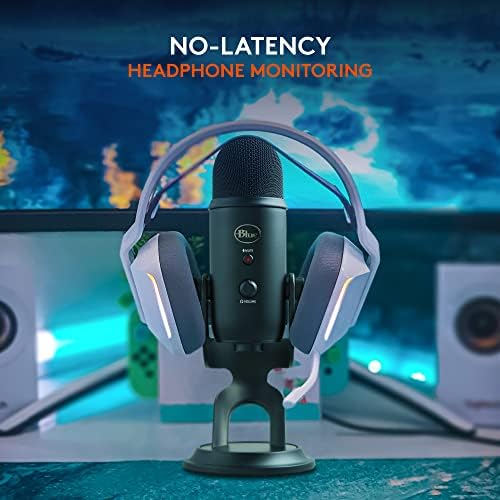
- Built-in headphone jack for zero-latency monitoring
- Solid metal build that anchors itself on the desk
Could be better
- Picks up keyboard, fan, and room noise aggressively
- Large and heavy — dominates a small desk
- Included stand transmits vibration; a boom arm is almost mandatory
Full Review
The Blue Yeti has been the default “upgrade from laptop mic” for over a decade, and after using it across hundreds of Zoom calls and a handful of podcast recordings, it’s easy to see why. It’s not the most flattering microphone you can buy at this price, but it’s arguably the most forgiving and flexible.
Sound Quality
Out of the box in cardioid mode, the Yeti sounds noticeably warmer and fuller than any headset or built-in laptop mic. Voices get body without sounding boomy, and the three-capsule array captures enough detail that listeners stop asking what microphone you’re on. It’s not a $500 broadcast condenser, but nobody on the other end of a call will know that.
The catch is sensitivity. The Yeti hears everything — mechanical keyboards, HVAC rumble, the neighbor’s leaf blower. Gain management and a reasonably quiet room matter more here than with a dynamic mic like the Shure MV7.
The Four Patterns Actually Matter
Most USB mics offer cardioid and call it a day. The Yeti’s pattern switch is what makes it genuinely versatile: cardioid for solo calls, bidirectional for a two-person interview across the desk, omnidirectional for a small group, and stereo for recording an instrument or room ambiance. I’ve used all four in real situations, which is more than I can say for most “feature-rich” gear.
Build and Ergonomics
The all-metal body and chunky base feel like gear that will outlive your current desk. Front-facing gain, mute, headphone volume, and pattern select are all physical controls — no software juggling. The included stand works but couples vibration straight into the capsules; plan on a boom arm like the Blue Compass or a Rode PSA1 if you type while you talk.
Who Should Buy This
Buy the Yeti if you want one mic that covers calls, podcast guests, and the occasional YouTube voiceover without fussing over an audio interface. If your home office has a loud keyboard, a noisy HVAC, or roommates through thin walls, consider the Shure MV7+ instead — a dynamic mic will reject that noise far better. For most remote workers in a reasonably quiet room, the Yeti remains the safest $130 you can spend on audio.