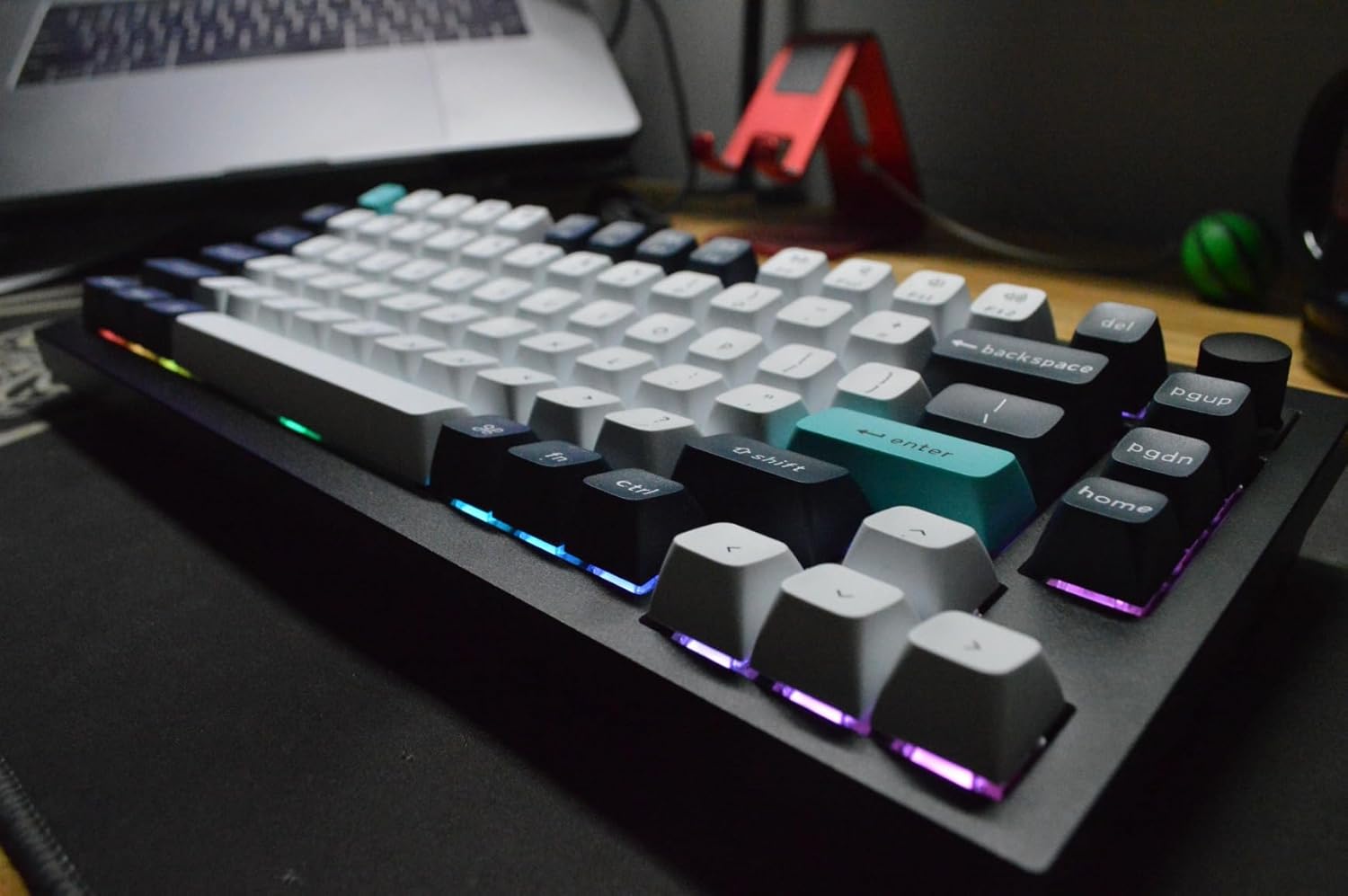
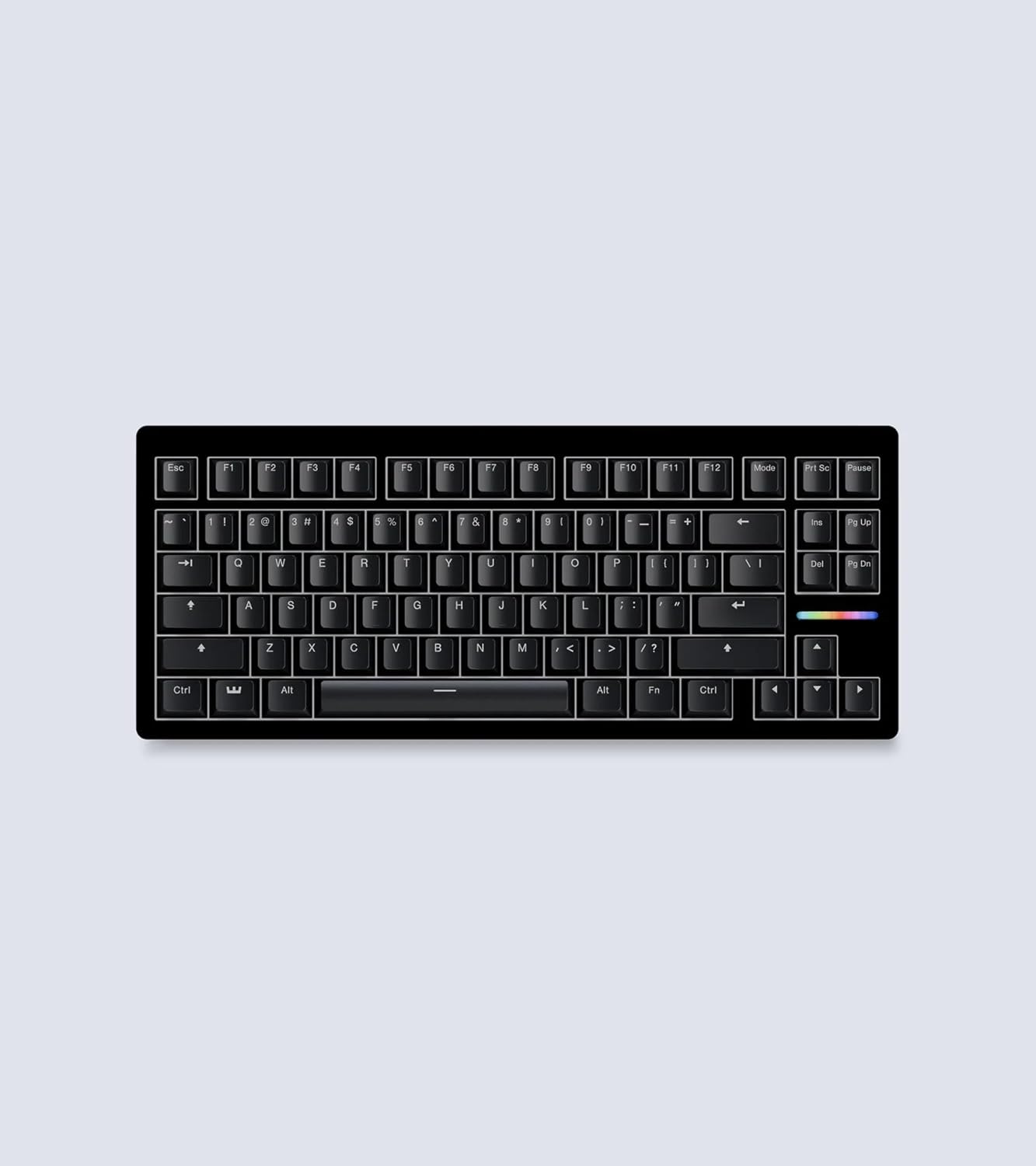
Keychron K15 Max Low-Profile Alice Wireless Keyboard
A rare combo of low-profile switches and Alice split-V layout that eases ulnar deviation without the steep learning curve of a true split keyboard.
Price may vary. As an affiliate, we earn from qualifying purchases.

What we like
- Alice layout reduces wrist deviation without requiring a tenting/splitting learning curve
- Low-profile chassis stays close to desk height — friendlier for arm rest and palm support
- Wireless via Bluetooth and 2.4GHz with wired USB-C fallback
- QMK/VIA programmable, hot-swappable low-profile switches
- Reasonable price for an ergo wireless mech in 2026
Could be better
- No tenting or number-row tilt — angle is fixed in the horizontal plane only
- Slim body means a small battery; heavy RGB users will be charging often
- Knob version costs more and the standard model loses that quick volume control
Full Review
The K15 Max sits in a niche almost no one else is filling: a low-profile mechanical keyboard with an Alice layout. Most ergo keyboards either go all-in on splitting and tenting (Keychron Q11, ZSA Voyager) or stick with a chunky full-size shell (Logitech Ergo K860). This one threads the needle for people who want a wrist-friendlier angle without relearning how to type.
The Alice Layout, Done Low-Profile
The split-V layout angles the two halves inward so your wrists sit more naturally — less ulnar deviation, less of that pinky-out reach for B and N. Because the halves are still connected, you keep muscle memory from a normal keyboard. Combined with the low-profile chassis, your forearms can rest flatter on the desk instead of bridging up over a tall case. After a week, the transition feels uneventful in a good way.
Build and Daily Use
The board is plastic but well-damped, with a typing sound closer to a thocky-light than a hollow rattle. PBT keycaps hold up, and the low-profile Gateron switches are smooth without the mushiness you sometimes get in slim switches. Bluetooth pairs to three devices, and the 2.4GHz dongle is the right call for desk work — latency is imperceptible. QMK/VIA support means you can remap anything, including the Alice-specific keys, without fighting proprietary software.
Where It Falls Short
The big honest gripe: the angle is purely horizontal. There’s no tenting, no number-row tilt — features the Keychron Q11 and Kinesis boards offer for users with serious wrist issues. The slim body also limits battery; expect a few days of heavy RGB use, longer with the lights off. And the knob version is a noticeable upcharge for what amounts to a volume dial.
How It Compares
If you want a no-compromise ergo setup, the Keychron Q11 (true split, tentable) is the better long-term choice but costs more and has a learning curve. The Logitech Ergo K860 is cheaper and softer but uses membrane switches and feels like office equipment. The older K15 Pro is still around at a discount — get the Max if you want the better wireless stack and updated switches, otherwise the Pro is fine.
Who Should Buy This
Buy the K15 Max if you want a wrist-friendlier typing angle but aren’t ready to commit to a fully split keyboard, and you prefer the lower profile of laptop-style switches. Skip it if you need tenting, a tilted number row, or all-day battery with RGB cranked — a Q11 or Ergo K860 will serve you better there.