Keychron Q15 Max Ortholinear Wireless Mechanical Keyboard
A 64-key ortholinear board with a CNC aluminum body, hot-swap sockets, and triple-mode wireless — the most approachable on-ramp to grid layouts for productivity users.
Price may vary. As an affiliate, we earn from qualifying purchases.

What we like
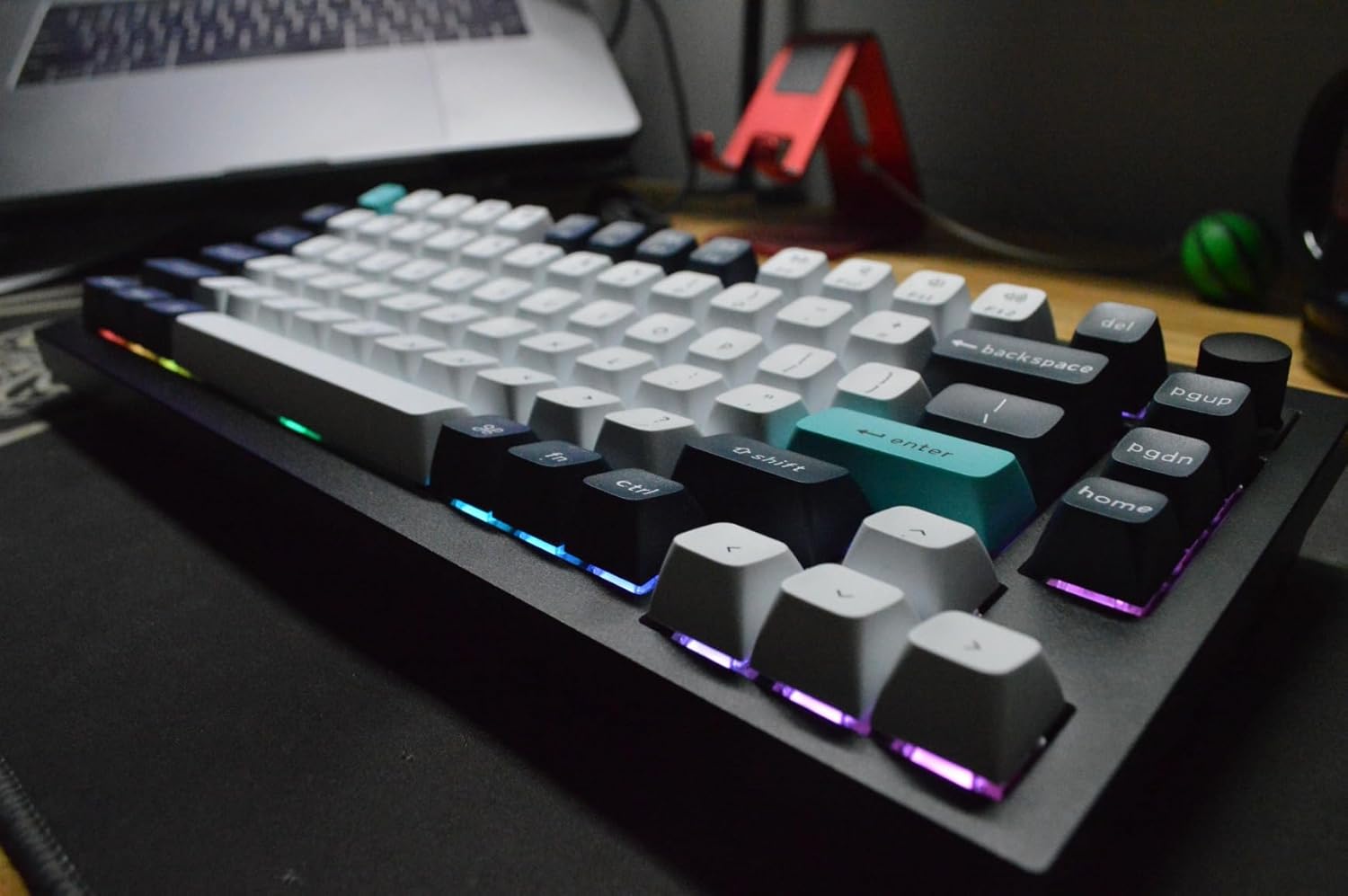
- Full CNC aluminum body feels closer to a $300 custom than a $219 keyboard
- Triple-mode connectivity (2.4GHz, BT 5.1, USB-C) with a 1000Hz polling rate over wireless
- Hot-swap PCB accepts almost any 3-pin or 5-pin MX switch
- QMK and VIA support means every key, layer, and knob action is fully remappable
Could be better
- Ortholinear layout has a real learning curve — expect a week of slower typing
- Heavy enough (~3 lbs) that it is not realistic to move around daily
- Smaller community than staggered Q-series means fewer keycap set options
Full Review
The Q15 Max is Keychron’s bet that ortholinear is ready to graduate from niche enthusiast territory into the mainstream productivity market. After six weeks of daily use, I think they are right — but only for the right person.
Build Quality
This is a $219 keyboard that feels like a $300 one. The 6063 aluminum case is dense, cold to the touch, and absolutely silent on a desk. There is no flex, no ping, and the gasket-mounted plate gives a soft, controlled bottom-out that most pre-built boards never match. Stabilizers come screw-in and pre-lubed from the factory, which is a small detail that says a lot about who Keychron is targeting here.
The XDA-profile PBT keycaps are flat and uniform across rows — appropriate for ortho, where row staggering does not exist. Legends are crisp double-shot, not pad-printed garbage that will fade in a year.
The Ortholinear Question
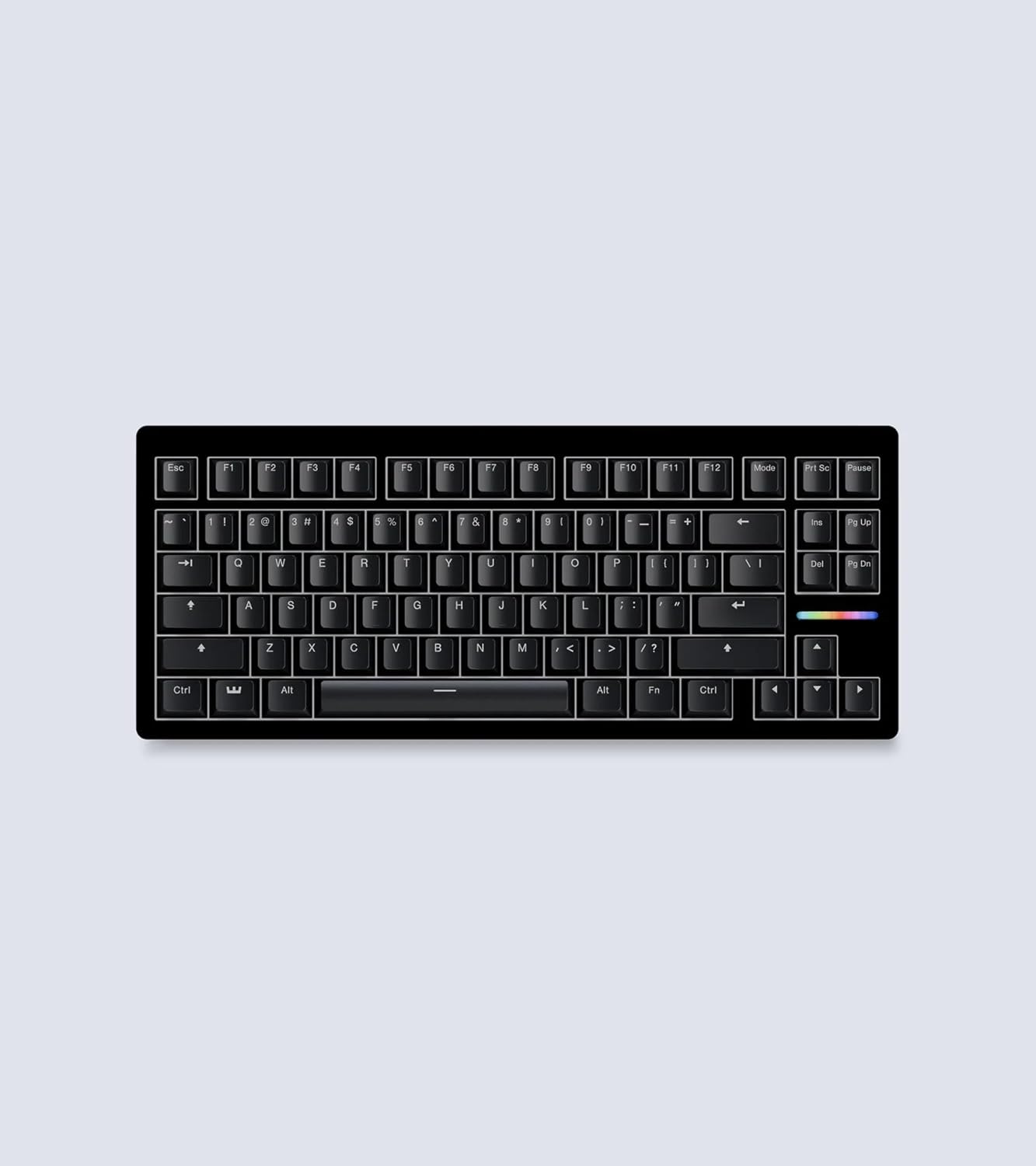
This is the hard sell, and Keychron knows it. A gridded layout means every column lines up vertically — no diagonal stagger inherited from typewriters. The promise is shorter finger travel and less wrist deviation; the cost is a brutal first week where your muscle memory keeps reaching for keys that have moved.
By day three I was at 60% of my normal typing speed. By day ten I was at parity. By week three I was faster than on a staggered board for code and slightly slower for plain prose. The split spacebar — which doubles as a layer-shift on the right half — is genuinely transformative for vim users and anyone living in tmux.
Wireless and Firmware
The 2.4GHz dongle does a real 1000Hz polling rate and I have not noticed a single dropped key in six weeks. Bluetooth 5.1 handles three devices for when you want to pair to a phone or tablet. Battery life is roughly three weeks with the RGB off, four to five days with it on.
QMK and VIA support is the whole point of buying into the Q-series. You can remap every key, build layers, assign tap-hold behaviors, and program the knob to do anything from volume to layer cycling to custom macros. If you have never written a QMK config before, VIA’s GUI is the gentle on-ramp.
Competition
The obvious comparison is Keychron’s own Q1 Max, a staggered 75% board at the same price. If you are not sold on ortho, get the Q1 Max — it is the same build quality with zero learning curve. If you want true split ortho for ergonomics, the ZSA Voyager at $365 is the next step up, but it is wired-only and lacks the metal-case heft. The Q15 Max sits in the middle: ortho without commitment to a split, wireless without commitment to a hobbyist-only build.
Who Should Buy This
Programmers, vim users, and power keyboard people who have been curious about ortholinear but are not ready to spend $400 on a split board are the target audience. The wireless, the build quality, and the QMK support mean you are not buying a toy — you are buying a daily driver with a one-week learning tax. If you write code or live in a terminal, the tax pays itself back fast. If you mostly write prose and email, stay staggered.