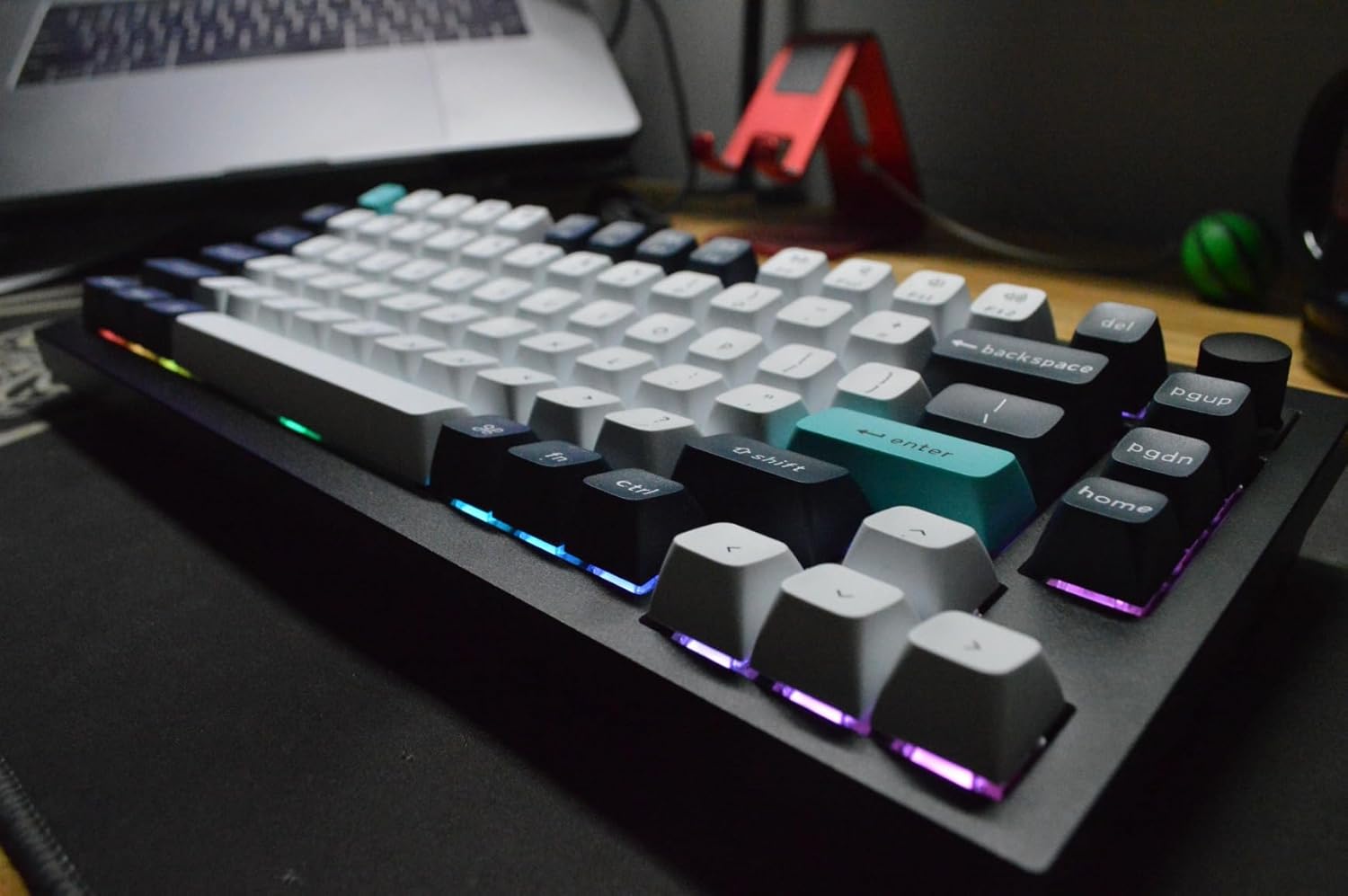
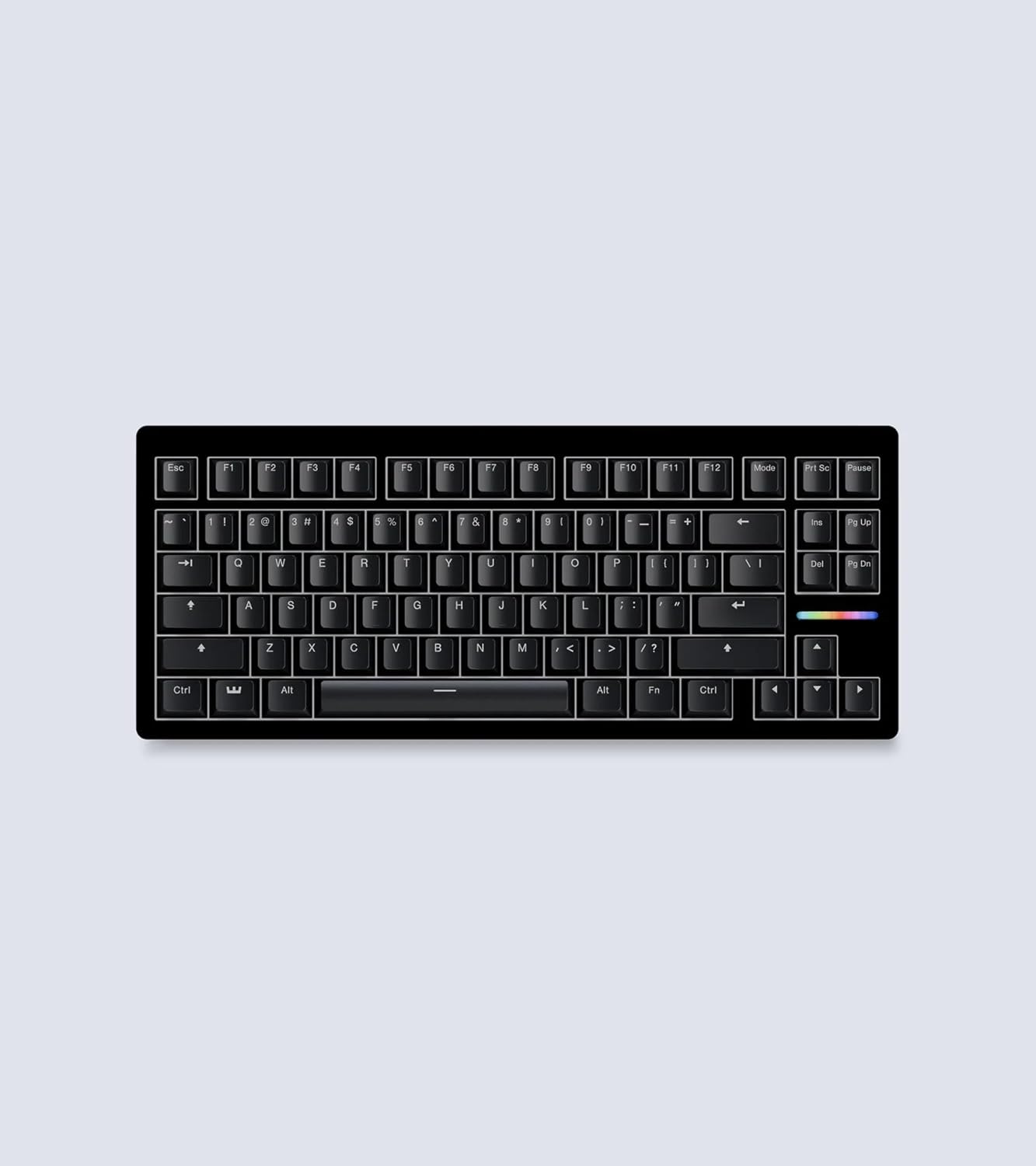
NuPhy Halo75 V2 Wireless Mechanical Keyboard
NuPhy's flagship 75% delivers the gasket-mounted, deep-thocky typing experience custom keyboard fans chase, at roughly half the price of a Keychron Q1 Max.
Price may vary. As an affiliate, we earn from qualifying purchases.
What we like
- Genuinely impressive out-of-box sound — deep, marbley, no ping or hollowness
- Tri-mode wireless (Bluetooth, 2.4GHz, USB-C) with 1000Hz polling on 2.4GHz and wired
- Hot-swap PCB accepts 3-pin and 5-pin MX-style switches
- Double-shot PBT keycaps in NuPhy's nSA profile resist shine and feel substantial
- Per-key RGB plus two side light bars are tasteful, not garish
Could be better
- Heavy at ~3.5 lbs — not the keyboard you toss in a backpack
- Stock stabilizers are decent but enthusiasts will still want to lube them
- VIA support exists but isn't as polished as Keychron's QMK/VIA implementation
Full Review
The Halo75 V2 is NuPhy’s answer to a question more people are asking: can a pre-built keyboard sound and feel like a custom build without the custom-build tax? At $169.95, the answer is mostly yes — and that’s the entire pitch.
Sound and Feel
This is the headline. The Halo75 V2 ships with five layers of internal dampening (PORON, silicone, IXPE), a gasket-mounted plate, and PBT keycaps in NuPhy’s nSA profile. The result is a deep, controlled “thock” that most keyboards in this price range don’t get close to. There’s no hollow ping, no case rattle, and the stabilizers are pre-lubed well enough that only enthusiasts will feel the urge to retune them.
Switch options matter here. The Raspberry and Night Breeze options lean tactile and quiet; the Cowberry linears are smoother and louder. All of them benefit from the gasket mount, which gives keypresses a slight bounce without feeling mushy.
Build and Wireless
The aluminum bottom plate and dense plastic top case push weight to about 3.5 pounds. That’s a feature on the desk and a problem in a backpack — this is a stationary keyboard. Tri-mode wireless works as advertised: Bluetooth for switching between three devices, 2.4GHz with the included dongle for low-latency work, and USB-C when you want maximum polling rate or just don’t want to think about battery.
The 4000mAh battery realistically lasts a couple of weeks with RGB off and dims aggressively when idle.
Versus Keychron Q1 Max and K6 Pro
The Q1 Max is the obvious comparison and it’s a better keyboard in absolute terms — full aluminum case, knob, more polished VIA experience — but it’s also $220+ and noticeably heavier. The Halo75 V2 gets you 90% of the way there for $50 less. The K6 Pro is cheaper but doesn’t compete on sound or build; it’s a different category.
Who Should Buy This
Buy the Halo75 V2 if you want a typing experience that punches above $170 without the time investment of building a custom board. It’s the right pick for someone upgrading from a Keychron K-series or a generic mechanical and wondering what all the “thock” talk is about. Skip it if you need a portable keyboard, if you’re already deep in QMK/VIA tweaking (the Q1 Max is friendlier there), or if you want a low-profile board — NuPhy’s Air series is the move for that.