Alienware AW2725Q 27" 4K QD-OLED Gaming Monitor
The first 27-inch 4K QD-OLED monitor with 166 PPI text sharpness — finally a do-everything panel for work, media, and gaming.
Price may vary. As an affiliate, we earn from qualifying purchases.
What we like
- 166 PPI matches the Apple Studio Display for text clarity
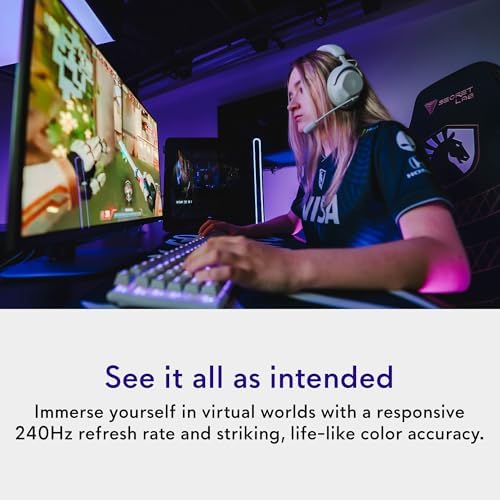
- 240Hz at native 4K with 0.03ms response — instant motion
- Dolby Vision plus DisplayHDR True Black 400 for genuine HDR
- Three-year OLED burn-in warranty included
- HDMI 2.1 FRL with eARC supports Dolby Atmos passthrough
Could be better
- Glossy coating shows reflections in bright rooms
- USB-C only delivers 15W — not enough to charge a laptop
- $899 is a steep premium over comparable IPS 4K panels
- No KVM switch despite the productivity positioning
Full Review
For three years, QD-OLED buyers had to pick a side: 1440p panels with stunning motion but fuzzy text, or 4K IPS panels with sharp fonts but milky blacks. The AW2725Q is part of the first wave that breaks the compromise. At 27 inches and 4K, the math works out to 166 PPI — the same density as Apple’s Studio Display, and the threshold where small text on a QD-OLED’s triangular subpixel layout finally stops looking fringy.
Text Sharpness Is the Real Story
Sit two feet from this monitor with a terminal open and you’ll forget it’s an OLED. The colored fringing that plagued earlier QD-OLED panels — that faint magenta-green halo on dark-mode IDEs — essentially disappears at this pixel density. ClearType on Windows still benefits from the OLED-specific tweak, but on macOS it just works. This is the first OLED I’d recommend to a developer without a “but you should know about the text” caveat.
Gaming and HDR
240Hz at native 4K is the headline, and the AW2725Q delivers it without DSC weirdness over DisplayPort 1.4. HDMI 2.1 FRL handles consoles at full bandwidth, and eARC means you can route Dolby Atmos out to a soundbar. Motion clarity at 0.03ms is the same instant response that made earlier QD-OLEDs feel revelatory — now in 4K. Dolby Vision support is a genuine advantage over the MSI 272URX, which sticks to HDR10.
Burn-In Anxiety, Addressed
Dell’s 3-year OLED burn-in warranty matches what ASUS offers on the PG27UCDM and beats most competitors. The panel runs aggressive pixel-shift and a logo-detection dimmer, and the redesigned chassis adds 360-degree ventilation to keep junction temps lower than the older AW3225QF. None of this eliminates the risk of static taskbars wearing in over years of all-day use, but the warranty turns it into a managed risk rather than a $900 gamble.
How It Compares
The MSI MPG 272URX runs $100 less but ships without Dolby Vision and with a shorter warranty. The ASUS ROG Swift PG27UCDM matches specs almost exactly but costs more and leans into a louder gamer aesthetic. The Alienware sits in the middle — restrained styling, full HDR feature set, and Dell’s service network if something goes wrong.
Who Should Buy This
Buy the AW2725Q if you want one monitor for everything — coding by day, Cyberpunk by night — and you’ve been waiting for QD-OLED text to stop being a dealbreaker. Skip it if your desk faces a window (the glossy coating will fight you), if you need a single-cable laptop dock (15W USB-C won’t cut it), or if you’re a pure productivity user who never games. For that last group, the Dell U3225QE delivers better text in bright rooms and saves you a few hundred dollars.