Beelink SER9 Mini PC (Ryzen 7 H 255, 32GB, 1TB)
A pocket-sized Windows desktop with Ryzen 7 H 255, 32GB LPDDR5X, USB4, and triple 4K output for about half the price of a comparable tower.
Price may vary. As an affiliate, we earn from qualifying purchases.
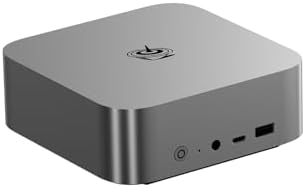
What we like
- Ryzen 7 H 255 (8C/16T) handles heavy multitasking, Docker, and light video editing without breaking a sweat
- 32GB LPDDR5X and 1TB PCIe 4.0 SSD ship standard at this price
- USB4 plus HDMI 2.1 and DP 2.1 drives three 4K displays from a 0.6L chassis
- 2.5GbE, WiFi 6, and Bluetooth 5.2 cover modern home office networking
Could be better
- Fan whine is audible under sustained CPU load in a quiet room
- Soldered LPDDR5X memory means no RAM upgrade path
- Integrated Radeon 780M is plenty for productivity but not a discrete GPU replacement
Full Review
The SER9 is Beelink’s answer to the Mac mini for people who actually need Windows. At $599 with 32GB of LPDDR5X and a 1TB SSD already installed, it undercuts every comparably-specced desktop tower and most prebuilt SFF boxes by a wide margin. The Ryzen 7 H 255 is the same 8-core/16-thread chip Beelink uses in the Pro and MAX variants — the difference here is cooling and chassis, not silicon.
Performance Where It Matters
For typical remote-work loads — a dozen Chrome tabs, Slack, Zoom, a couple of VS Code windows, and a Docker stack running in the background — the SER9 doesn’t flinch. The Radeon 780M is genuinely capable: 4K video playback is smooth, DaVinci Resolve handles 1080p timelines without proxies, and Premiere will edit 4K if you stay reasonable about effects. It’s not a gaming PC and not a Blender workstation, but it punches well above what you’d expect from a 0.6L box.
Three 4K Displays From a Brick
The display setup is the SER9’s quietly impressive trick. HDMI 2.1, DP 2.1, and USB4 each independently drive a 4K monitor, which means a triple-screen home office runs off one cable bundle. USB4 also doubles as a dock connection — one Thunderbolt-compatible cable to a monitor with passthrough, and you have power-cycle convenience that Windows mini PCs traditionally couldn’t match.
The Honest Trade-offs
The fan is the main complaint. Under a sustained compile or a Handbrake encode, it spins up to a noticeable whine — not loud, but present in a quiet room. The other catch is upgradability: the LPDDR5X is soldered, so the 32GB you buy is the 32GB you keep. The SSD is replaceable, and there’s a second M.2 slot for expansion, but if you think you’ll want 64GB of RAM in two years, this isn’t the box.
Who Should Buy This
The SER9 is the right pick for Windows-based remote workers, developers who run Docker locally, and content creators with light-to-moderate video workflows who don’t want to spend tower money for tower performance. If you want true gaming or a discrete GPU, look at a small-form-factor build instead. If you want macOS, the Mac mini M4 is the obvious comparison. But for anyone who needs a quiet, compact, genuinely fast Windows desktop under $600, this is the easiest recommendation in the category.