OBSBOT Tiny 3 AI-Powered Spatial Audio 4K Webcam
The first webcam with a 1/1.28-inch sensor and built-in spatial audio, finally killing the need for a separate USB mic on most calls.
Price may vary. As an affiliate, we earn from qualifying purchases.
What we like
- Largest sensor in any consumer webcam (1/1.28"), beating MX Brio and Insta360 Link 2
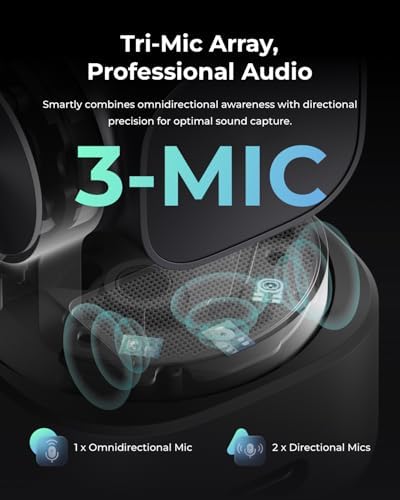
- Tri-mic spatial audio array sounds good enough to replace a USB mic for casual calls
- AI Tracking 2.0 on a real 2-axis gimbal — smooth, not jittery digital crop
- Gesture and voice controls actually work in practice
- 4K30 and 1080p120 with HDR and proper PDAF autofocus
Could be better
- $329 puts it above the Logitech MX Brio and Insta360 Link 2
- Software (OBSBOT Center) still feels rougher than Logi Options+
- Spatial audio is great for calls, but a dedicated mic still wins for podcasting
Full Review
OBSBOT dropped the Tiny 3 in late January and it has quietly become the AI webcam release of the year. The headline spec is the 1/1.28-inch sensor — physically larger than what Logitech put in the MX Brio and what Insta360 used in the Link 2. The other headline is the integrated tri-mic spatial audio, which is the first time a webcam has shipped a microphone good enough that you can stop apologizing for using it.
The Sensor Actually Shows Up on Video
A big sensor in a webcam is not a marketing flex — it changes how you look on Zoom. Skin tones land in a believable range, your monitor backlight no longer blows out the wall behind you, and shadow detail under desk lighting stays clean instead of mushy. Compared side-by-side with the MX Brio in a dim home office, the Tiny 3 holds noticeably more highlight detail and noise stays controlled up through ISO 6400. DCG HDR isn’t a gimmick here. 4K30 is the headline mode but 1080p120 is the one streamers will care about.
Spatial Audio Is the Real Story
Three mics — one omnidirectional plus two MEMS directional — feeding five audio modes. In “voice focus” mode it sounds startlingly close to a dedicated cardioid USB mic two feet away from your face. Background fan noise, mechanical keyboards, and the dog in the next room get suppressed without that gated, choppy artifact that ruins most webcam mics. For day-job calls and casual streams, you can genuinely retire your Blue Yeti. For podcast recording or serious streaming you still want a dedicated mic, but the gap has shrunk dramatically.
AI Tracking 2.0 and the Gimbal
The 2-axis physical gimbal is what separates this from the “AI tracking” gimmick on cheaper webcams that just crop the frame. The Tiny 3 actually pans and tilts to keep you centered as you move, and the tracking algorithm is finally smooth enough that viewers won’t notice it working. Gesture controls (open palm to start tracking, L-shape to zoom) work reliably, and the voice wake word is fast. Standing-desk users will appreciate this more than anyone — sit, stand, lean back, the framing follows.
Tiny 3 vs. MX Brio vs. Insta360 Link 2
The Tiny 3 wins on sensor size and on audio. The MX Brio wins on price ($199) and on software polish. The Insta360 Link 2 sits in the middle and has the best whiteboard/document modes. If you do a lot of video calls and have been thinking about buying a USB mic, the Tiny 3 is the cheapest way out — one device replaces two. If you already own a good mic, the MX Brio is probably the smarter buy.
Who Should Buy This
Buy the Tiny 3 if you take video calls daily, want to look and sound clearly better than your colleagues, and would rather not run a separate microphone. It is also the right pick for streamers who need a webcam-grade B-cam with usable audio. Skip it if you already own a decent USB mic and just need a camera — the MX Brio gets you 80% of the image quality for 60% of the price.